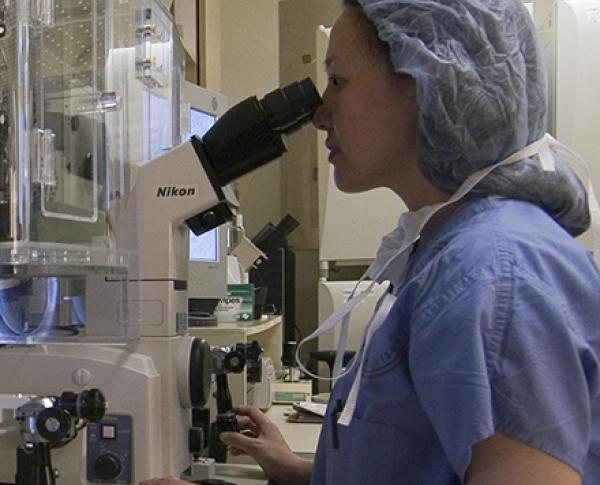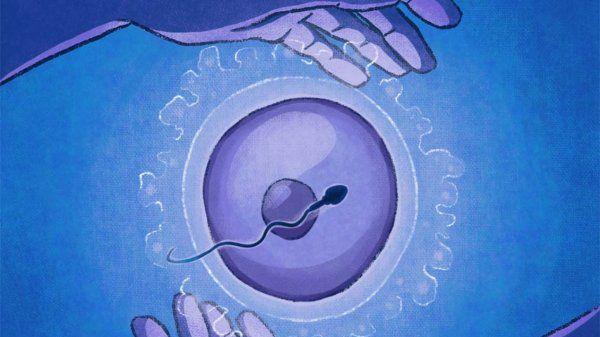

Embryo donation occurs when a patient or couple donates their remaining embryos from a successful IVF cycle to another patient or couple, so that the recipient(s) can have a baby of their own. The recipient mother has the embryos transferred to her uterus. The resulting child is genetically related to the donors, yet is carried and raised by the recipient parent(s).
The UCSF Embryo Donation Program serves our patients in two important ways. For recipients, we are able to provide another family-building option to our fertility patients. For donors, we are able to provide our former IVF patients with a very special option for the disposition of their unused embryos.
Embryo recipients must be or have been patients at the UCSF Center for Reproductive Health. Your doctor will help you decide whether or not you are a good candidate. Embryo donation is a lower cost option than traditional IVF. Types of patients who might consider embryo donation include those with male and female factor infertility, previous failed treatments, or very low chances of success with other fertility treatments.
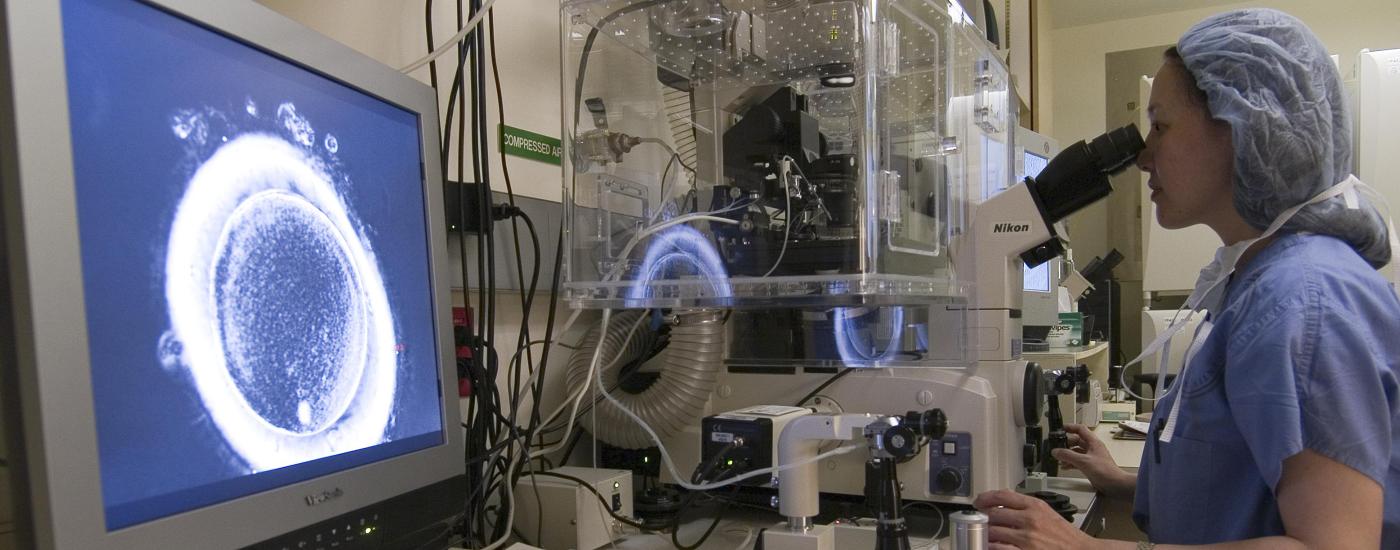
Donors are carefully screened by our Embryo Donation Program team. In screening donors, we adhere to the guidelines from the American Society for Reproductive Medicine, the United States Food and Drug Administration, and to the university’s institutional ethics board. To determine if embryos are eligible for donation, the UCSF team reviews the patient’s chart and the laboratory information to determine whether the embryos can be offered to potential recipients.
Screening factors include patient’s psychological readiness to make a donation, family genetic history, and age of the female donor – the egg donor’s age must have been 39 or younger at the time when the embryos developed.
Full screening includes:
To assess these factors, each patient meets with our team psychologist to discuss their decision to donate, their background and history, meets with our genetic counselor to review family genetic history (embryo donors may not have any serious genetic diseases) and takes a set of screening blood and saliva tests.
Our careful screening process is the cornerstone of our program yet there are limits to the routine screening program. We cannot guarantee the success of the thawing and transfer process, nor can we guarantee the health of any child that might result from the donation.
We offer all recipients the opportunity to meet with the program’s genetic counselor to review the embryo donors’ family history, genetic testing status and other optional genetic tests.
You will receive many types of information about the donors and their background, including physical characteristics (e.g., height, hair and eye color), ethnic background, blood type, family medical and genetic history, educational background, and personality characteristics. Some donors also share photographs of themselves and/or their children.
Because our program is new, we have limited data to offer statistics of success rates for this specific program. We estimate, however, the success rates will be similar to that of frozen embryo transfer success rates in our practice in general, which is about 30-40% per cycle.
Embryo donors are often open to meeting the recipients. If patients would like to meet the donors, our coordinator, Sandra Abdel-Ramirez can arrange this with willing donors.
The estimated total costs for an embryo donation cycle are approximately $5,000-$6,000. Full payment is due prior to thawing of the embryos.
At UCSF, we currently have more recipients waiting for embryos than available embryos, so there is a waitlist. There is no cost to adding a name to the waitlist, so patients can to do this even if they are not sure if embryo donation is right for them. Note only UCSF Center for Reproductive Health patients may place their name on the waitlist.
Although we encourage donors to be open to helping the next recipient on our waiting list, donors are permitted to make personal matching restrictions regarding marital status, ethnicity, religion, gender, and sexual orientation. Therefore, the waitlist may be longer for certain patients depending on the requests of the particular donors we are working with at that time.
Once embryos are offered to patients, they have 30 days in which to submit a non-refundable deposit of $500 for a frozen embryo transfer cycle, and an additional 90 days in which to begin their cycle. If a patient declines to go forward with the embryos offered, we will proceed to the next recipient on the waitlist. Patients may retain their place on the waitlist for the next 12 months.
If you decide you are no longer interested in receiving embryos, please let our coordinator know. Having an up-to-date waitlist helps us to give interested recipients better estimates of their wait-time.
Once a patient submits their $500 deposit, they have access to all the embryos available from that donor until they achieve a pregnancy and deliver a baby. If a patient does not become pregnant using a donor embryo, they may ask to be placed back on the waitlist.
Once a patient delivers a baby, they may also choose to retain any remaining embryos for future use. To do so, they must pay storage fees for the embryos. If the patient no longer desires the remaining embryos, we offer them to another patient.
Recipients and donors must understand that, someday, the child born from embryo donation may want more information about their genealogy or genetic health history. In addition, some children born from embryo donation may want to meet the donors and their families. It is important for recipient parents to consider how they might feel about these possibilities. Also, parents who do not share this information with the child run the risk of the child finding out accidentally or from someone else in the future.
Embryo donation is relatively new terrain, and there is much we still do not know about its long term psychological, social, and legal implications. While this is an ongoing area of active research, it is important that patients enter the process as well-informed as possible. Both donors and recipients must understand that the recipient couple will be the parents of any child that may be born, even though the child is genetically related to the donors. The child will derive their innate traits from the donors, yet the recipients will be raising the child, and thus will be provide the nurturing environment in which the child will grow and develop. It is common for donors to have concerns about having a child born from their embryos raised in another family that they do not know. Potential donors need to carefully evaluate and understand how they may feel about wondering if their embryos ever did lead to a child and if so, how the children are doing.
Donors sign a consent form stating that at the time of the transfer, they are relinquishing all rights and responsibilities regarding their embryos. There are no laws in California concerning embryo donation, however, recent court decisions suggest that in the case of donated eggs and sperm, the recipient parents will be recognized as the legal parents. Patients are encouraged to consult their own attorney with further legal concerns.
If you would like to be placed on the waitlist or confirm your place, please discuss it with your doctor and call Sandra Abdel-Ramirez at (415) 885-3590.
The Embryo Donation Team is available to help you should you have any questions or concerns. You can also learn more by visiting the website for the American Fertility Association (www.TheAFA.org) or Resolve, The National Infertility Association (www.resolve.org).
Sandra Abdel-Ramirez, screening and matching coordination
Sandra Cisneros, RN, cycle coordination
Gina Davis, MS, CGC, genetic counselor
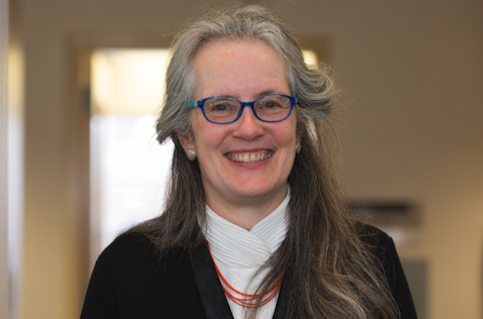
Lauri Pasch, PhD, psychologist
Victor Fujimoto, MD, medical director
| The UCSF Center for Reproductive Health, located in Northern California's San Francisco Bay Area offers a comprehensive array of infertility evaluation and treatment options for both men and women. Our services include: Infertility Evaluation, Male Reproductive Health, Fertility Preservation, Reproductive Surgery, Tubal Reversal Surgery, In Vitro Fertilization (IVF), Intracytoplasmic Sperm Injection (ICSI), Pre-implantation Genetic Diagnosis (PGD), Intrauterine Insemination (IUI), Ovulation Induction, Donor Sperm Insemination, Egg Donor Program for Donors, Egg Donor Program for Recipients, Embryo Donation Program for Donors, Embryo Donation Program for Recipients, Polycystic Ovarian Syndrome (PCOS), Recurrent Pregnancy Loss, Gestational Surrogacy, Genetic Screening and Counseling Psychological Support. |
© 2010 The Regents of the University of California. All rights reserved. |
Terms of Use / Privacy Policy |