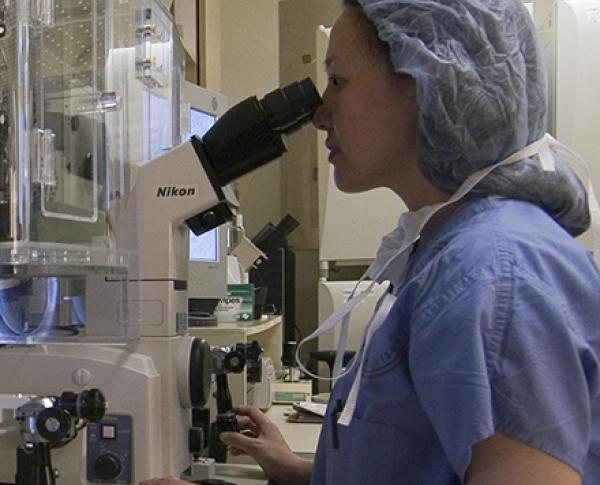

The UCSF Egg Donor Program began in 1991 and was one of the first donor egg programs in the San Francisco Bay Area. Egg donation is a method that allows couples to become parents when the woman is unable to successfully conceive using her own eggs. The UCSF Egg Donor Program helps over one hundred couples achieve their goal of becoming parents each year. Initiating the process of having a baby through egg donation may seem complicated at first, but take comfort in knowing that our experienced physicians, nurses, and counselors will guide you step-by-step through the entire process. 
An increasing number of women are choosing egg donation when other traditional infertility therapies have been unsuccessful or when hormonal tests indicate very poor reproductive potential. Using an egg donor may also be appropriate for a woman whose ovaries were absent at birth or were removed or damaged by surgery, chemotherapy and/or radiation. Finally, it can be an option for patients who would like to eliminate the risk of passing on a known genetic condition carried by the female partner.
Because the chance of achieving a live birth is strongly related to the age of the egg, using donor eggs can often substantially increase the likelihood of having a baby from IVF. At UCSF, the chance of achieving a live birth from a single egg donation cycle is greater than 60%. Furthermore, because many cycles using donated eggs result in surplus embryos to freeze, the cumulative pregnancy rate including subsequent frozen embryo cycles is approximately 80% at our center.
Having a baby using a donor egg provides couples with the opportunity to experience pregnancy, childbirth, and breastfeeding, and to have a child who is genetically connected to the father. You and your partner will have control over many aspects of the process, including when to try to become pregnant and the choice of the donor.
An important step in the egg donation process is choosing a donor. At UCSF, we respect that the process of determining the right donor is a uniquely personal decision. We have several resources, including a psychologist with expertise in fertility and family building, to assist in the decision-making process. There are two basic types of egg donors:
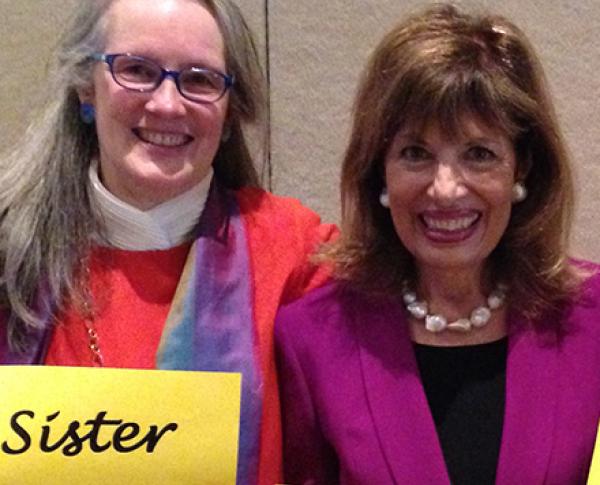
• Known DonorsKnown donors are most commonly sisters, but also can be cousins, nieces, friends, and sometimes acquaintances. Known donors must pass minimum screening criteria. They may be compensated or non-compensated.
• Recruited DonorsRecruited donors are usually young women with excellent reproductive potential who are compensated for their time and efforts in assisting other patients in becoming pregnant. Recruited donors may be found through egg donor agencies or through the UCSF Center for Reproductive Health in-house Egg Donor Program.
The team at UCSF recruits and screens a pool of in-house donors who are available for selection by our patients. The cornerstone of our program is our highly selective comprehensive screening process. In recruiting and screening donors, we adhere to the guidelines from the American Society for Reproductive Medicine, the United States Food and Drug administration, and to our own institutional ethics board. Our donors are recruited and screened by our egg donor screening team, including Dr. Huddleston, reproductive endocrinologist, Dr. Pasch, clinical psychologist, Gina Davis, certified genetic counselor, and our donor egg coordinators. In most cases, donors become available only after their screening has been fully completed and candidates have been designated as eligible according to all our guidelines. This includes full review of medical history, physical examination, genetic and mental health screening, and testing for infectious disease.
There are several benefits of choosing a donor from our pool. We have a highly selective comprehensive screening process. Our multidisciplinary team that includes a physician, psychologist and genetic counselor work together to ensure that donors in our pool are fully eligible. This means that you are unlikely to experience the disappointment of carefully choosing a donor from an agency only to find out they are ineligible once they are medically screened. Additionally, you will have the ease and simplicity of working closely with one center for all of your needs during the egg donation cycle. Finally, using a donor from our pool is often more economical than working with an agency because there are no extra agency fees to pay.
We work collaboratively with many outside egg donor agencies. Outside agencies recruit and partially screen donors. The agency then assists couples in identifying possible donor matches from within their pool. We are happy to assist you in coordinating a donor egg cycle with a donor from an outside agency. One benefit of using an outside agency is the overall larger pool available to you. Because there are many agencies in the Bay Area, couples may find donors meeting their own specific criteria more efficiently by working with an agency.
If you are interested in using a donor from an outside donor agency, we will provide you with a list of donor agencies in the area. We recommend that you ask the agency about their policies and procedures for recruitment and screening directly. Donors from outside agencies must have a mental health screening arranged through the agency and must meet specific criteria for eligibility, such as recent infectious disease screening, to proceed with a cycle within our center. Once selected, the donor will undergo an exam performed by physicians in our office prior to cycle planning.
• ConsultationA first step for prospective patients is to consult with one of our reproductive endocrinologists who will perform an evaluation and then discuss the various treatment strategies available to you. Our physicians strive to help guide you in understanding all aspects of the options available. If you decide to proceed with a donor oocyte cycle, your physician will discuss what is required to prepare for your cycle. Your physician will perform a medical evaluation and physical examination to ensure that your health would not be jeopardized by pregnancy.
• Cycle PreparationTo optimize the success of a donor egg cycle, your physician will order several tests that seek to identify and correct any abnormalities that could interfere with fertilization and/or implantation. These tests include a detailed semen analysis, a saline sonogram (a test which evaluates the uterine cavity) and basic blood work evaluating blood count, blood type and thyroid function. In consideration of your overall health, we also require that you are up to date on recommended health screening, such as the pap smear and mammogram (if over 40).
Though women achieve high success rates with egg donation throughout their 40s, the risks during pregnancy increase as age approaches 50. If you are 45 or greater, additional testing is recommended to ensure that you enter your pregnancy in optimal physical condition. This testing includes a screen for diabetes, an EKG and clearance by a perinatologist (high-risk obstetrician).
As part of preparation for the cycle, you will also meet with our psychologist to discuss your plans for egg donation and to review the various decisions you will face now as you go through the process and in the future once you have a child born from egg donation.
• UCSF DonorsIf you are working with the UCSF Egg Donor Program, our egg donor coordinator will arrange a time for you to view profiles of our donor candidates. You will have access to information about the donor’s background, medical history, educational level, and family history. You will also have the option of viewing photographs of prospective donors. We will discuss with you any relevant findings from the screening process itself, including genetic screening and testing, mental health screening, infectious disease results, and physical findings.
• Agency Donors
Once you have chosen a donor, the donor coordinator will confirm with the donor candidate that she is free for donation during the time period requested. Once the donor selection process is complete, information about your donor will be given to your physician and nurse coordinator, and your cycle will be arranged.If you select a donor from an outside agency, the agency will send information about the donor to our office for cycle coordination.
It is important for the donor and recipient to be synchronized so that the recipient’s uterine lining will be ready for implantation at the same time the donor’s eggs are retrieved and fertilized. This is usually accomplished by administration of birth control pills to synchronize the egg donor and recipient’s cycles. When the cycles are synchronized, the donor is instructed to take the medications to stimulate the growth and maturation of a cohort of eggs, and is monitored by ultrasound and blood tests over the course of 10-14 days, until the eggs are ready for egg retrieval. Meanwhile, the recipient will be taking different medication to prepare the uterine lining for implantation of the embryos.
Once the donor’s eggs reach the point of maturity, an egg retrieval is scheduled. The recipient’s partner or sperm donor will need to provide a sperm sample on the day of the egg retrieval for insemination of the eggs. When the embryos reach the proper stage for transfer, usually day 3, the recipient will return to the clinic for transfer to the uterus. We typically recommend the transfer of one or two embryos from donor cycles. The decision regarding how many embryos to transfer will be discussed in detail with you by your physician. The transfer of a single embryo will reduce the risk of a twin gestation. Additional high quality embryos that are available from the cycle can be frozen and preserved for their use at another time.
Click on a question to read the answer.
How do I/we decide if egg donation is right for me/us?
Donor egg can be a wonderful way for couples who are unable to conceive on their own to become parents. Nevertheless, arriving at the decision to pursue egg donation can be a difficult process. Patients often come to this decision over time, after thinking hard about what becoming parents really means to them. Couples may consider other options at this time as well, including adoption or not having children. Our psychologist is available to help you think through your thoughts and feelings about the varied family building options available to you.
What qualities should I look for in a donor?
To maximize the likelihood of success, we recommend you chose a donor who is under 35. Most egg donors are between the ages 21-30. Other factors related to likelihood of success are having previously carried a pregnancy to term, or having previously completed an egg donor cycle with good results. Other factors that many patients consider are physical characteristics, ethnic background, family medical history, educational background, and personality characteristics. Our whole team can help you with any questions you have about the selection process.
How are donors screened?
UCSF donors undergo an extensive screening process. Prospective donors complete a detailed questionnaire that is reviewed by our team. Donors meeting specific criteria are invited to complete the additional screening. Additional screening involves meetings with our coordinator, a reproductive endocrinologist, a psychologists and a genetic counselor. The reproductive endocrinologist screens the donors medical history and the psychologist completes a psychological screen to determine acceptability into the program. Our board-certified genetic counselor screens for family history of birth defects or hereditary diseases via a comprehensive family history assessment. A report of the findings and the family tree is available upon request. The prospective donor also must undergo a physical exam, cultures and blood test to rule out the presence of infectious diseases, such as HIV, Hepatitis B, Hepatitis C, Gonorrhea, Chlamydia. In addition, our donors are tested for their blood type and are screened for cystic fibrosis and hemoglobinopathies. American Society of Reproductive Medicine (ASRM) and FDA guidelines are followed for all screening procedures.
If we choose to meet the donor, is that an option?
Yes. Donors recruited from our UCSF Egg Donor Program are often willing to meet the recipients if the recipients want to meet them. Usually this meeting is completed without exchange of any identifying information like last names, addresses, or telephone numbers, so that anonymity of the arrangement is maintained. If desired, the meeting can be facilitated in our offices with the assistance of our psychologist, Dr. Lauri Pasch. If you use a donor from an agency, the agency can also assist in arranging a meeting.
What if I have a known donor willing to donate her eggs?
The first step is to discuss your known donor with your UCSF reproductive endocrinologist. He or she will help determine if your donor is a good candidate. Known donors are usually younger than 35 years old, in good health, and have a healthy family background. You can refer your known donor to our Egg Donor Program page for Donors by clicking here.
What are the legal implications of accepting a donor egg?
Your donor will sign a consent form in which she relinquishes all rights and responsibilities regarding her donated eggs. In California, the woman who delivers the baby is the legal mother except in pre-arranged gestational carrier arrangements. Thus, for women using egg donation to in order to conceive, there is no need to file any legal documents to establish the parentage of the child.
Laws regarding the use of donor egg vary in different states and countries. We can provide resources in the community for legal assistance if desired.
If you are a new patient and interested in more information about the UCSF Egg Donor Program, contact us at 415-353-7475. We will discuss the program with you and set up an initial consultation with a member of our team. During this first appointment, the procedure will be discussed in detail. After taking your medical history, the physician can then best advise you whether egg donation is a viable option for you.
If you are an established UCSF Center for Reproductive Health patient and interested in more information about egg donation, including the UCSF Egg Donor Program, speak to your physician or nurse about next steps.
| The UCSF Center for Reproductive Health, located in Northern California's San Francisco Bay Area offers a comprehensive array of infertility evaluation and treatment options for both men and women. Our services include: Infertility Evaluation, Male Reproductive Health, Fertility Preservation, Reproductive Surgery, Tubal Reversal Surgery, In Vitro Fertilization (IVF), Intracytoplasmic Sperm Injection (ICSI), Pre-implantation Genetic Diagnosis (PGD), Intrauterine Insemination (IUI), Ovulation Induction, Donor Sperm Insemination, Egg Donor Program for Donors, Egg Donor Program for Recipients, Embryo Donation Program for Donors, Embryo Donation Program for Recipients, Polycystic Ovarian Syndrome (PCOS), Recurrent Pregnancy Loss, Gestational Surrogacy, Genetic Screening and Counseling Psychological Support. |
© 2010 The Regents of the University of California. All rights reserved. |
Terms of Use / Privacy Policy |